Dry Eye Management
Low-Level Light Therapy: Calming Inflammation, Supporting Gland Function
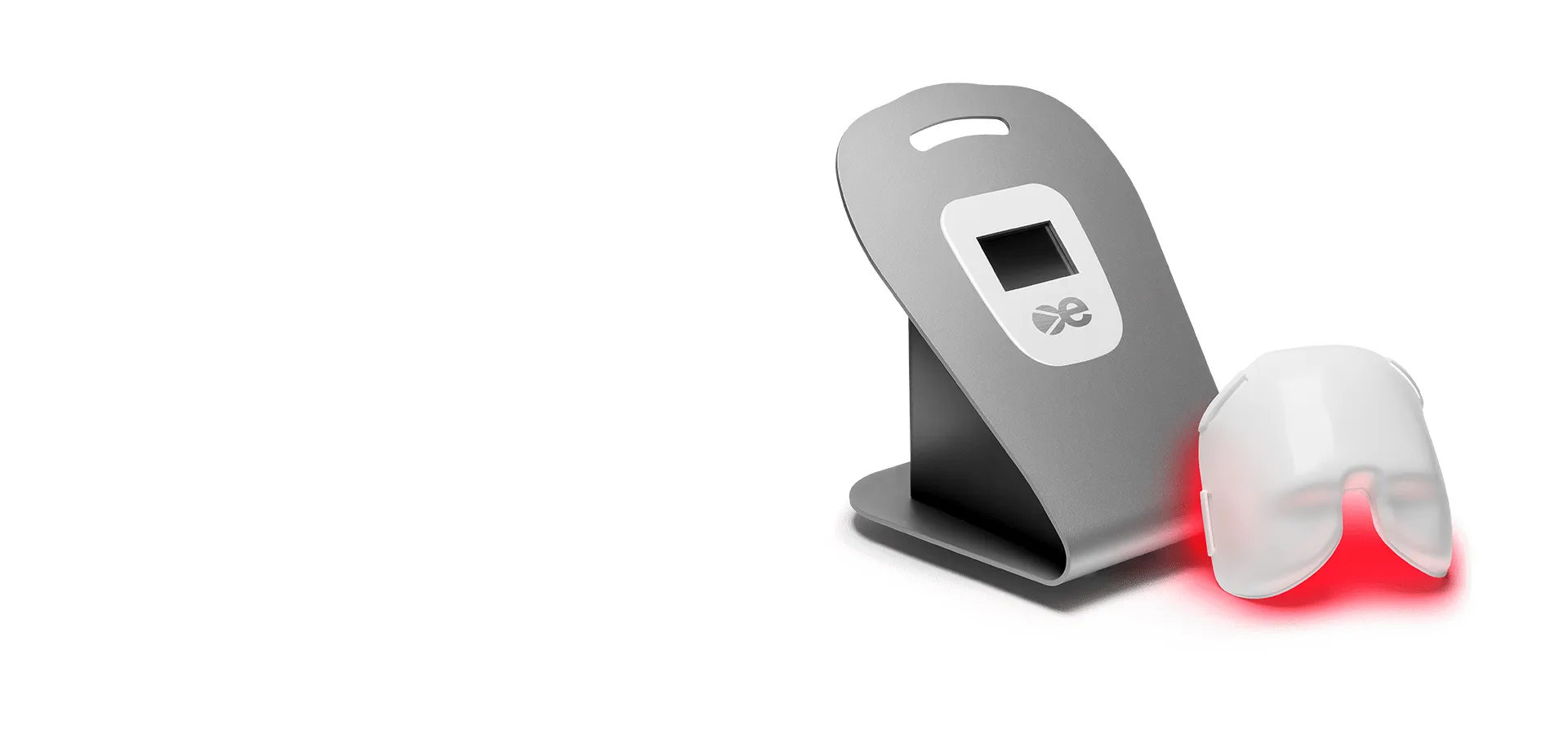
A gentle, 17-minute treatment applied over closed eyes, using the MeiboMask system to support the glands behind a healthy tear film.
A gentle, 17-minute treatment applied over closed eyes, using the MeiboMask system to support the glands behind a healthy tear film.
Most dry eye traces back to the meibomian glands along your eyelid margin. When these glands stop producing enough healthy oil, your tear film breaks down more quickly, leaving eyes feeling gritty, tired or strained by the end of the day. Low-Level Light Therapy, or LLLT, is a light-based treatment aimed at supporting these glands, rather than simply lubricating the surface.
During a session, low-intensity light is applied gently over your closed eyelids for around 17 minutes. There are no needles and no medication involved, just a soft warming sensation while the treatment works beneath the surface.
LLLT is an increasingly well-supported treatment for dry eye disease, particularly where meibomian gland dysfunction (MGD) is a significant contributor. Clinical studies, including randomised controlled trials, have reported improvements in dry eye symptoms, tear-film stability, lipid-layer thickness and meibomian gland function. Through photobiomodulation, LLLT may help reduce inflammation, support cellular function and improve meibomian gland activity, making it particularly relevant for evaporative dry eye.
We recommend LLLT as part of a comprehensive treatment program and, where appropriate, combined with IPL and meibomian gland expression to address different aspects of MGD. We consider LLLT a valuable treatment option within modern dry eye management. Following your Dry Eye Assessment, we will determine whether LLLT is appropriate for your specific condition and whether it should be used alone or combined with other treatments.
A light-based device built for the eyelids, not a general-purpose warming or beauty tool.
A conventional heated eye mask works in one way only: it applies passive warmth to soften oil within the glands. MeiboMask does this too, but adds a calibrated dose of therapeutic light delivered directly to the eyelids, a mechanism a simple heat mask simply doesn't have. It's also a different device altogether from LED masks marketed for skincare. Those are tuned for the skin's surface, with wavelengths and protocols built around cosmetic appearance rather than eye health. MeiboMask is calibrated specifically for meibomian gland and ocular surface outcomes, not cosmetic results.
LLLT tends to work best alongside a broader plan, often together with IPL, for patients with meibomian gland dysfunction. Our Dry Eye Assessment confirms whether this fits your findings before we recommend it, rather than offering it as a default.
Four short sessions, spaced roughly a week apart, with the benefit building gradually across the course.
First session. You'll recline comfortably with your eyes closed while the MeiboMask delivers a gentle, 17-minute light treatment across both eyelids.
Second session. The light continues targeting the meibomian glands, and some patients start noticing a subtle easing of end-of-day irritation.
Third session. With each visit, the treatment's effect is thought to build further, supporting steadier gland function across the course.
Fourth session, completing the course. Most patients notice improved comfort and steadier tear-film stability by this final visit.
Because LLLT's benefit builds gradually, we recommend completing the full four-session course before judging its effect rather than stopping partway through. A single top-up session can help sustain your results afterwards, and LLLT is often reviewed alongside IPL as part of your ongoing plan.
A pre-paid package works out cheaper than paying visit by visit, and bundling with IPL saves even more.
A Comprehensive Eye Examination or Dry Eye Assessment is required before starting any dry eye treatment, so we can confirm the treatment is the right choice for your condition. Additional fees may apply for non-Medicare holders.
For patients with significant meibomian gland dysfunction, light-based treatment is usually followed by meibomian gland expression by our optometrist. IPL or LLLT can be used to address factors contributing to eyelid and ocular-surface inflammation, while gland expression helps remove thickened or stagnant meibum from the glands, for more complete and lasting relief.
Every treatment plan starts with understanding your eyes properly. A thorough assessment with our dry eye expert will determine whether LLLT is the right choice for you, rather than a default option offered to everyone, regardless of their individual needs.