State-of-the-art diagnostic technology lets us look deeper into your eyes than most practices in the country — finding early signs of disease, tracking change with precision, and giving your care an evidence-based edge.

Every instrument in our clinic exists for one reason — to help us find eye conditions earlier, understand them more precisely, and look after your eyes better over the years to come. Here's how our technology supports every stage of your care.
Many eye conditions have no symptoms in their earliest, most treatable stages. Our imaging can pick up microscopic changes long before you'd ever notice something was wrong.
Detailed, objective measurements take the guesswork out of diagnosis, so any issue we find is backed by clear evidence, not just an impression.
Every scan is saved to your file as a precise, dated record, so at your next visit we can compare directly and catch even the smallest change over time.
Where treatment is needed, our technology lets us track how well it's working, so your management plan can be adjusted with confidence.
Every visit begins with a set of fast, precise baseline measurements — the foundation everything else is built on.
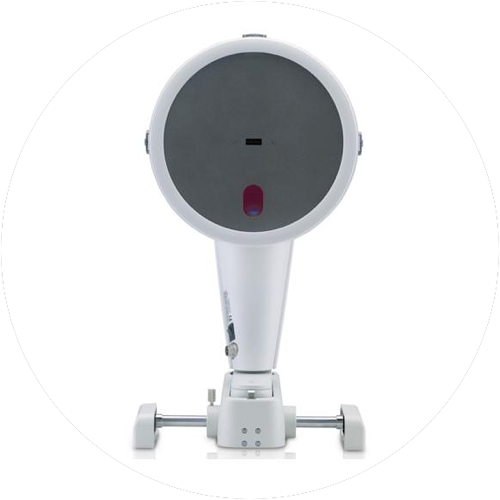
In under a minute, this single instrument estimates your glasses prescription, maps your cornea's curvature, checks your eye pressure for early glaucoma risk, and measures your corneal thickness — all without ever touching your eye.
Reads the exact prescription ground into your current glasses in seconds, so we can compare it accurately against your new results and confirm any new lenses were made correctly.
High-resolution photographs of the front of your eye — eyelids, cornea, conjunctiva — become part of your permanent record, so we can spot even subtle changes at your next visit.
Precise, repeatable measurements let us track how your eyes — or your child's eyes — are changing, visit after visit.
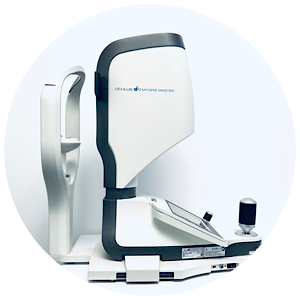
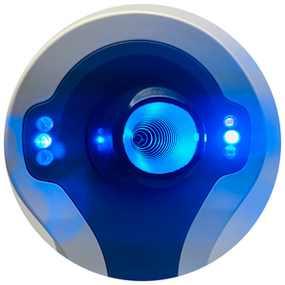
Measures your child's eye length, corneal curvature and prescription in one gentle, puff-free scan, giving us the reliable data we need to track myopia progression and know whether treatment is working.
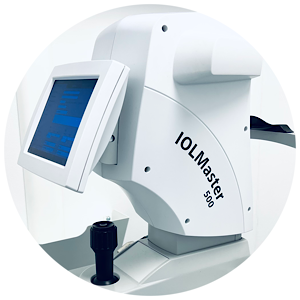
The gold-standard biometer for anyone considering cataract surgery, taking ultra-precise eye measurements to help calculate the ideal replacement lens power for your surgeon.
A detailed map of your cornea's shape is essential for fitting OrthoK and specialty lenses accurately, and for catching corneal disease early.
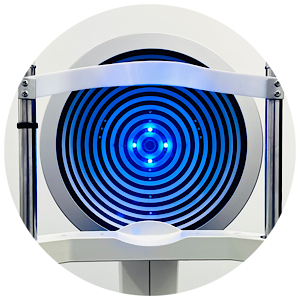
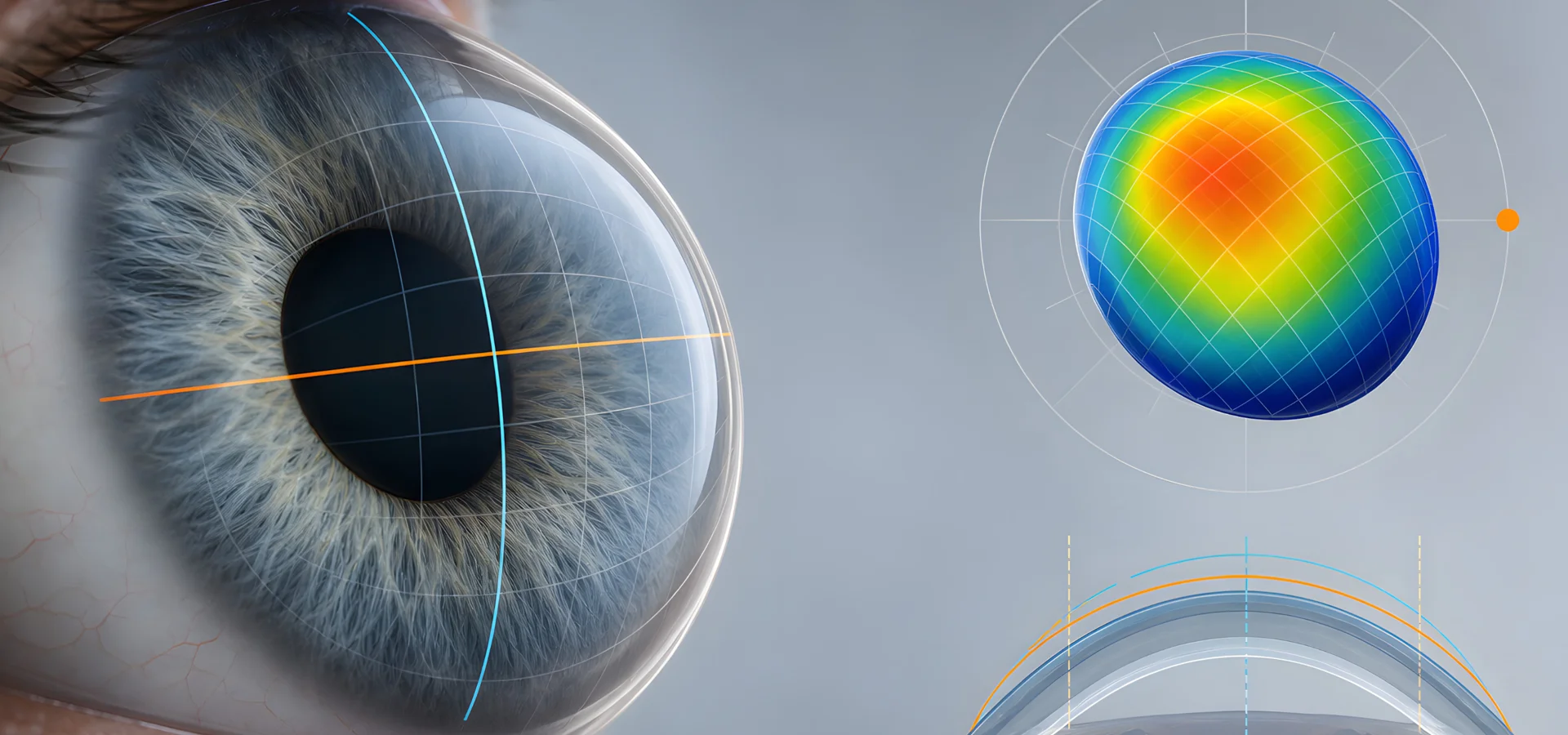
Creates a detailed 3D map of your cornea's surface — essential for fitting orthokeratology and specialty contact lenses precisely, and for diagnosing early dry eye and corneal irregularities.
A newer, ultra-wide colour imaging system that maps your cornea's surface and tear film in one pass, helping us catch early corneal changes and assess ocular surface health in detail.
Scans both the front and back surfaces of your cornea to build a complete 3D picture, letting us detect keratoconus at its earliest stage — often years before it would otherwise be noticed.
Looking further into the back of your eye is often the only way to catch serious eye disease before it affects your vision.
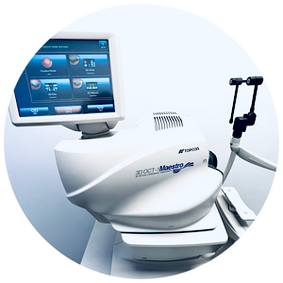
Takes a cross-sectional, high-resolution scan of your retina's individual layers, allowing us to detect glaucoma, macular degeneration and diabetic retinopathy well before symptoms appear.
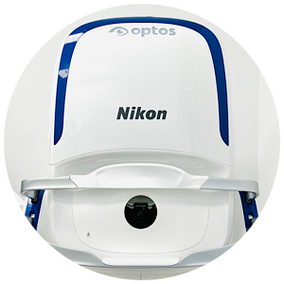
Captures more than 80% of your retina in a single, comfortable image, helping us spot problems at the far edges of the retina that a standard exam can miss.
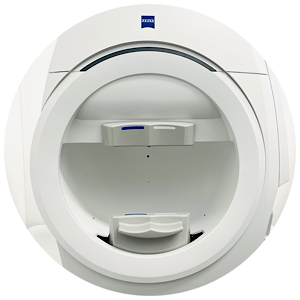
Maps your peripheral vision to detect the subtle blind spots that are often the first sign of glaucoma or optic nerve disease, and provides the certified visual field testing required for a VicRoads driving assessment.
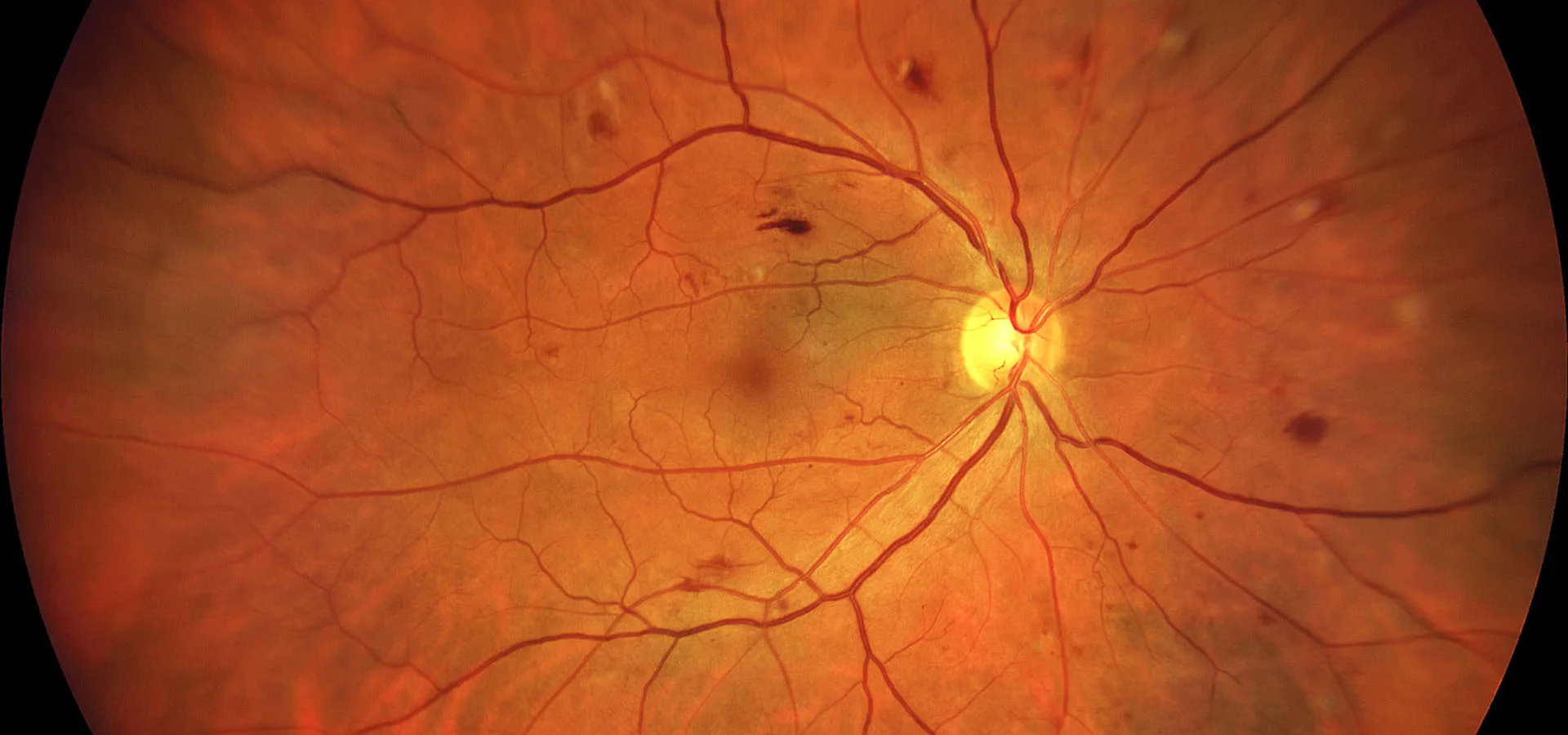
Our Optos ultra-widefield scanner captures 200°, or more than 80% of your retina, in a single, comfortable scan — compared to around 15% with a traditional exam — helping us spot problems at the far edges of the retina, especially important for high myopes, diabetics and anyone with a family history of retinal disease.
From pinpointing the exact cause of your dry eye to treating it in-clinic, our dry eye technology covers the full picture.
A non-contact scan that measures your tear film's stability, volume and quality, and photographs your meibomian (oil) glands, pinpointing exactly what's causing your dry eye symptoms.
Our newest dry eye analyser measures tear break-up time and lipid layer thickness in fine detail, giving us an even clearer picture of your ocular surface so we can tailor the right treatment.
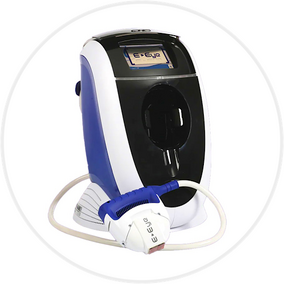
Evidence-based intense pulsed light treatment that stimulates your meibomian glands back into healthy function, reduces inflammation and helps control Demodex mites, easing dry eye symptoms at the source.
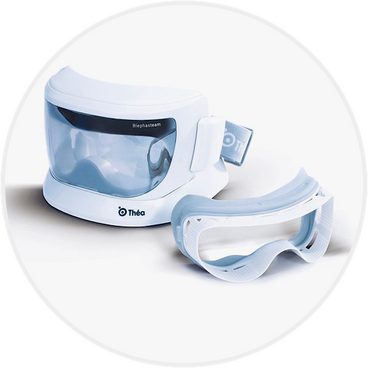
A gentle light-based mask treatment that warms and stimulates your meibomian glands to release trapped oils, offering a comfortable, in-chair alternative for managing dry eye and blepharitis.
A soothing eyelid-warming device worn for 10 to 15 minutes to loosen thickened oils in the meibomian glands, recommended every 3 to 6 months for ongoing dry eye and eyelid gland care.
Book an eye test online and see our technology in action, or get in touch if you have any questions first.