If you've been reaching for lubricating drops whenever you remember, it's worth understanding what's actually going on. Dry eye is a genuine chronic condition, and proper diagnosis opens up a lot more than drops alone.
If you've been using lubricating drops on and off for months or years, reaching for them whenever your eyes feel gritty or tired, it's worth pausing on something important: dry eye is a genuine chronic disease, not just an occasional inconvenience to smooth over with a bottle from the pharmacy.
For a long time, dry eye was thought of simply as "not enough tears." An international panel of dry eye researchers, in reports known as TFOS DEWS II and, more recently, DEWS III, reviewed an enormous body of evidence and reached a clearer, more useful conclusion: dry eye is a disease of the tear film and the surface of the eye, and for most people it isn't really about tear quantity at all. It's about tear quality and stability.
In practical terms, most people with dry eye are producing a perfectly normal amount of tears. The problem is that those tears evaporate too quickly, usually because the thin oily layer that's meant to seal them in isn't working properly. That distinction changes everything about how dry eye should be diagnosed and treated.
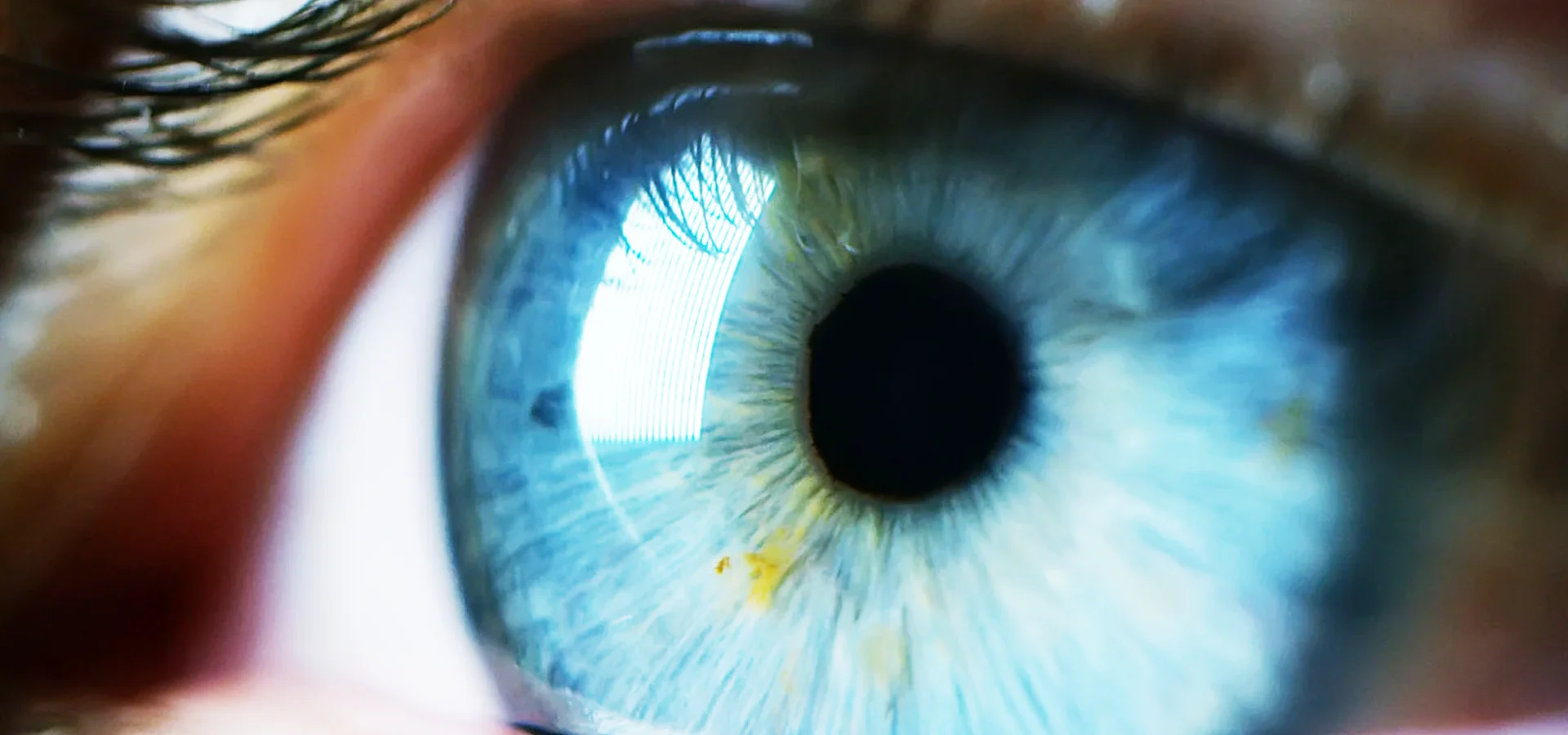
Dry eye shows up differently for different people, and symptoms don't always match how "dry" your eyes actually are. Here's what we hear most often.
A persistent sensation like there's something in your eye, even though there's nothing actually there.
A hot, irritated feeling that can build up over the day, especially with concentrated visual tasks.
Vision that seems to clear with a blink, then blurs again minutes later, particularly when reading or using screens.
Sounds contradictory, but excess watering is often the eye's reflex response to an unstable, irritated tear film.
Bright light, screens or sunlight can feel more uncomfortable than they used to.
Lenses that used to feel fine now feel dry, uncomfortable, or hard to wear for a full day.
Eyes that feel increasingly tired, heavy or strained the longer you're on a screen.
Needing lubricating drops more and more often just to get through the day comfortably.
Dry eye rarely has just one cause. Here are the factors we see most often, sometimes alone, often layered on top of each other.
By far the most common underlying cause. The tiny oil glands along your eyelids become blocked or their oil thickens, so the protective layer over your tears breaks down and they evaporate too fast.
We blink less often, and less completely, when focused on a screen. That means the oily layer of the tear film gets refreshed far less often than it should.
Wind, air conditioning, heating and low humidity all speed up tear evaporation, especially in Melbourne's variable climate.
Tear production and quality naturally decline with age, and hormonal shifts, particularly around menopause, commonly bring on or worsen dry eye.
Lenses sit directly on the tear film and can disrupt it, particularly with longer wearing times or lenses that aren't well suited to drier eyes.
Antihistamines, some blood pressure medications, antidepressants and several other common medications can reduce tear production as a side effect.
Lubricating drops treat the symptom in front of you, the feeling of dryness, without touching the underlying cause. For most people, that underlying cause is meibomian gland dysfunction, and left unaddressed, it tends to progress. Glands that are chronically blocked can eventually stop functioning altogether, and that gland loss is largely irreversible.
This is really the core message we want people to take from this page: treating dry eye as a minor, occasional nuisance to smooth over with a bottle from the pharmacy means the actual disease keeps progressing quietly in the background. Proper diagnosis identifies what's really going on, so treatment can target the cause, not just mask the symptom.
The upside is that dry eye disease responds well to the right treatment. Most people move from frequent, disruptive symptoms to a comfortable, well-managed baseline, often with far less day-to-day reliance on drops than when they started.
Your tear film is made up of three layers working together: an inner mucin layer that helps tears spread evenly, a watery middle layer that makes up most of the volume, and a thin outer oily layer that stops the whole thing evaporating too quickly. All three need to be working properly for a stable, comfortable tear film.
When the oily layer breaks down, usually from meibomian gland dysfunction, tears evaporate faster than they should. This raises the tear film's salt concentration, a state called hyperosmolarity, which irritates and inflames the surface of the eye. That inflammation then makes the tear film even less stable, and a self-sustaining cycle takes hold: instability leads to inflammation, and inflammation leads to more instability.
This is the central finding behind DEWS II and DEWS III: dry eye is fundamentally an inflammatory disease of the ocular surface, driven by tear film instability. Breaking that cycle, rather than just topping up moisture, is what proper treatment aims to do.
Understanding exactly what's driving your dry eye is what separates genuine treatment from guesswork. Our Dry Eye Assessment goes well beyond asking about symptoms.
Measures how quickly your tear film breaks apart after a blink, a direct indicator of tear film stability.
Specialised imaging shows the structure of your meibomian glands directly, revealing blockage or gland loss that can't be seen otherwise.
A special dye highlights any areas of surface damage caused by ongoing dryness, showing us the real impact on your eyes.
A structured symptom questionnaire alongside your screen habits, contact lens wear and medical history builds the complete picture.
The point of this assessment isn't to hand you another bottle of drops. It's to identify exactly which layer of your tear film is failing, and why, so we can recommend treatment that targets the actual cause of your dry eye rather than a generic starting point.
Modern dry eye care has moved well beyond drops. As a destination Dry Eye Clinic, we offer a genuine range of in-clinic treatments, matched to what your assessment actually finds.
Targeted light pulses near the eyelids reduce inflammation and help restore normal meibomian gland function. Learn more about IPL.
A gentle light-based treatment often paired with IPL to further support gland function and reduce inflammation. Learn more about LLLT.
Controlled, moist heat warms and loosens thickened oil in the meibomian glands, making it easier to clear blockages. Learn more about Blephasteam.
An in-clinic procedure that cleans the eyelid margin thoroughly, removing debris and biofilm that contribute to gland blockage. Learn more about the Zest procedure.
Gentle, controlled pressure clears blocked glands directly, often used alongside heat-based treatments for the best result. Learn more about gland expression.
Specialty lens options designed specifically for drier eyes, so contact lens wear doesn't have to mean discomfort. Learn more about lenses for dry eyes.
Explore the full range of dry eye treatments or read our Dry Eye FAQ for more detail.
Dry eye deserves the same level of proper diagnosis and structured treatment as any other chronic eye condition, and that's exactly the approach we take. Our Dry Eye Clinic combines detailed diagnostic imaging with a genuinely full range of in-clinic treatments, so care is built around what your eyes actually need, not a one-size-fits-all recommendation.
We see patients from right across Melbourne specifically for dry eye care, and our aim is simple: help you rely far less on drops, and feel comfortable again during the activities dry eye tends to get in the way of, reading, screens, driving, and contact lens wear. Our Kew East practice is easily accessible from across Melbourne's inner east, including Hawthorn, Camberwell, Balwyn and Box Hill.
The best next step is a proper Dry Eye Assessment, so we can show you exactly what's happening with your tear film and talk through the treatment options that fit your situation.
If dry eye is affecting your reading, screens, driving or contact lens wear, a proper assessment is the first step towards understanding what's really going on, and finding a treatment that actually helps.