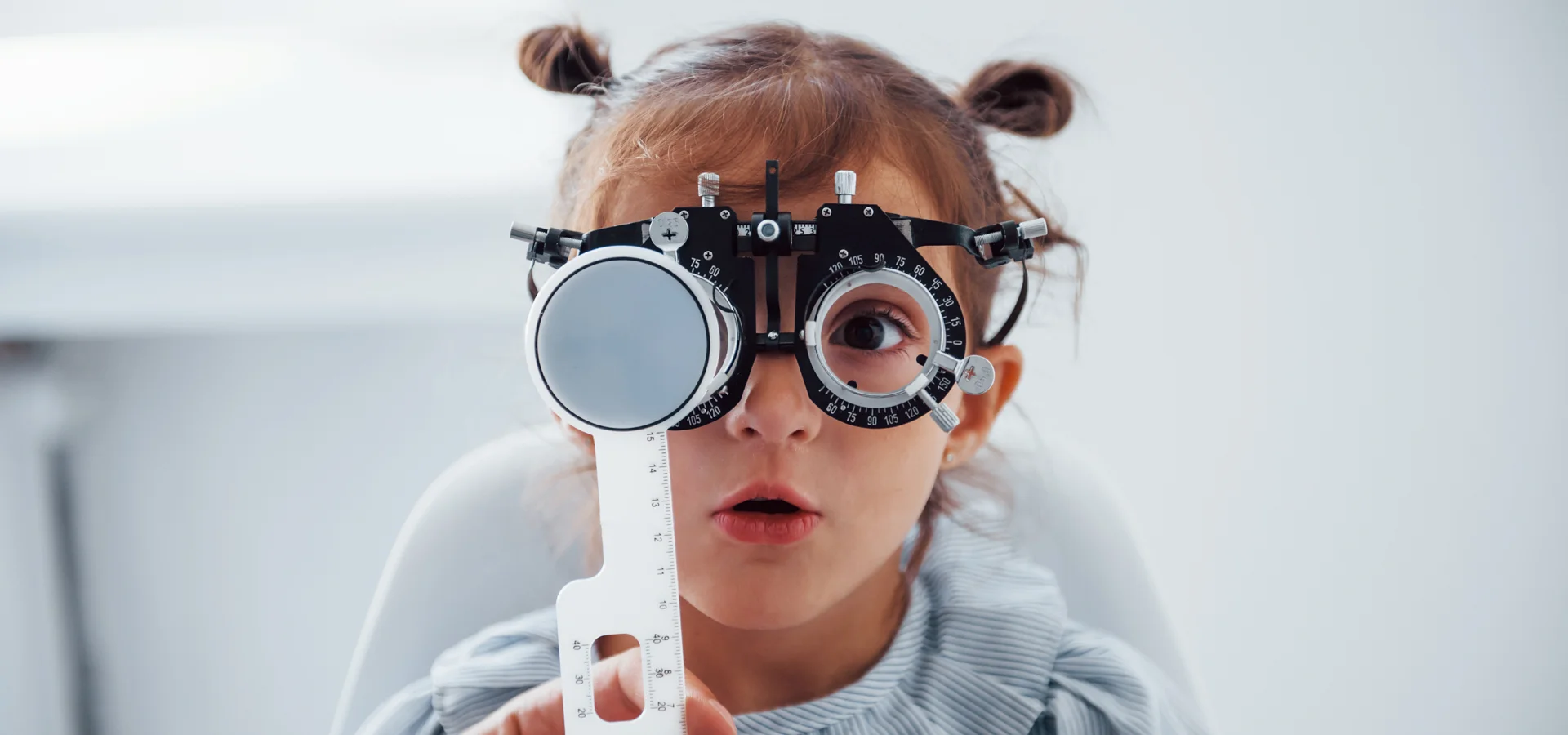
Child having an eye test
Eye Care For Kids

Concerned about your child's eyes? You've come to the right place

1 in 5 children have an undetected vision problem.

Eye Care For Kids

Kid-Friendly Eye Care, Right From The Start

Eyecare Concepts is committed to providing the best in children's eye care. Our clinic has been designed to be kids-friendly so their eye test can be a fun and exciting experience, with children's eye test charts suitable for kids as young as 2, electronic vision measuring for infants, and a full suite of tests spanning young children through to teenagers.

If you have concerns about your child's eyes or eyesight, we can help. Our highly-trained and experienced optometrists can diagnose any eye condition or vision problem your child may have. As much as 80% of a child's learning occurs through their eyes, so having good, comfortable vision from an early age is vital for their natural development, learning and schooling.

For kids with myopia (short-sightedness) that keeps getting worse, we can help slow down or even stop progression with our individualised, evidence-based treatment program, SightControl. Learn about Myopia Control For Kids.

A child having her first eye test at Eyecare Concepts

Your kids have your eyes.

Many eye problems have a hereditary basis. Problems such as short-sightedness, long-sightedness, astigmatism, eye-misalignment and lazy eyes often run in families. If you have vision problems and wear glasses, your kids have a higher chance of having or developing similar problems too. It's a good idea to have their eyes tested regularly from an early age even if they don't display any signs or symptoms.

Eye Tests For 5 Year Olds

Did you know one in five kids have a vision problem?

And they often don't know it.

The Right Age To Start

When Should Children Have Their Eyes Tested?

We recommend that all children have a comprehensive vision and eye health examination by the age of 3, and regularly through their primary and secondary schooling.

Although most young children will have a basic ‘vision screening’ test carried out by the Maternal & Child Health Service, at around 3 and a half years of age, this screening is not a substitute for a comprehensive eye test by an optometrist. In fact, we have seen some children with significant vision problems that their screening test had failed to detect.

Children are often not aware of changes in their vision and don't complain of blurred vision. That's why many children with vision problems go undetected. So it's important that parents recognise the signs indicating their children may need help with their eyesight. Otherwise these children may start to fall behind in their educational and social development. Some vision issues, if not diagnosed early enough, can lead to a lifetime of poor vision.

As part of our children's vision assessment, we can provide a concise written report on our test findings, any issues found, and our management plan for you to take home, and a copy for your child's teacher at school.

kids-eye-care-02.jpg — Child During A Comprehensive Eye Test At Eyecare Concepts

Signs of Vision Troubles

Are they missing out? Source: Optometry Australia

Squinting their eyes
Frequent eye rubbing or blinking
Short attention span
Headaches
Sitting too close to the TV
Does not like reading for long
Holding a book too close to their face
Mixing up/skipping words when reading
Closing or covering one eye
Poor eye-hand coordination
Tilting their head
Falling behind in reading and writing
Not achieving significant milestones
Child smiling after an eye test

Children should be tested annually from the age of 3.

Or earlier and more often if they show any signs of vision problems.

Click below to book an eye test for your child today.

Book a Children's Eye Test
kids-eye-care-03.jpg — Happy Child Wearing New Glasses At Eyecare Concepts
Common Questions

Children's Eye Care FAQs

What age should my child have their first eye test?
We recommend a comprehensive eye examination by age 3, even if there's no obvious sign of trouble. Conditions like a lazy eye (amblyopia) or misaligned eyes respond best to early treatment, and become much harder to correct the older a child gets. After that first test, we recommend annual eye tests right through primary and secondary school.
What are the signs that my child might have an undetected vision problem?
Watch for squinting, frequent eye rubbing, headaches, sitting close to the TV, avoiding reading, holding books close to their face, tilting their head, covering one eye, or a short attention span and falling behind at school. Children rarely complain of blurred vision themselves, since they usually assume what they see is normal, so it's up to parents and teachers to notice these signs.
My child had a vision screening at Maternal & Child Health — isn't that enough?
No. The Maternal & Child Health vision screening, done at around 3 and a half years of age, is a basic check, not a substitute for a comprehensive eye test by an optometrist. We've seen children with significant vision problems that their screening had failed to pick up, so we still recommend a full eye examination by age 3.
Will my child need eye drops during their eye test?
Not routinely. A standard children's eye test is comfortable and non-invasive, using instruments and charts designed for young children. Dilating drops are only used in specific circumstances, for example if we need a clearer view of the back of the eye, and we'll always explain why before using them.
My child is too young to read letters, or won't sit still — can you still test them?
Yes. Our clinic is designed to be kids-friendly, with picture and symbol-based eye charts suitable for children as young as 2, plus electronic vision measuring for infants and toddlers who can't yet identify letters or pictures. We're used to working with wriggly, shy or nervous kids and adapt the test to keep it fun.
How long does a children's eye test take at Eyecare Concepts?
Most children's eye tests take around 30 to 45 minutes, covering vision, focusing, eye alignment and overall eye health. We're never rushed with young patients, and we build in extra time where a child needs it to feel comfortable.
Is a children's eye test covered by Medicare or my health fund?
Eyecare Concepts is a private billing practice, so most consultations, including children's eye tests, are not bulk billed and a consultation fee applies. Most comprehensive children's eye tests are eligible for a Medicare rebate depending on the consultation type and item codes involved, and we claim that rebate for you on the spot straight after the appointment, with the funds paid electronically into your Medicare-linked bank account a few days later. See our Fees & Charges page for full pricing and rebate details, including for glasses and any myopia control treatment.
My child is short-sighted and their prescription keeps getting worse — what can we do?
Progressive short-sightedness (myopia) in children can often be slowed with evidence-based treatment, rather than simply updating their glasses each year. Our SightControl program uses options such as specialised spectacle lenses, contact lenses, orthokeratology or low-dose atropine drops. Read more on our Myopia Control Treatment page and our MiyoSMART lens page.
What glasses options work best for young or active kids?
For toddlers and active kids, we recommend flexible, durable frames built to handle drops, knocks and constant wear. Our TOMATO Glasses range is specifically designed for children, from babies through to teens, and includes options that stay comfortably in place during play and sport.
Does eye trouble run in families — should I get my child tested even if they seem fine?
Yes, many eye problems have a hereditary basis. Short-sightedness, long-sightedness, astigmatism, eye misalignment and lazy eyes often run in families, so if you or your partner wear glasses, your kids have a higher chance of similar problems. As much as 80% of a child's learning happens through their eyes, and children often don't realise or mention that their vision isn't normal, so we recommend regular testing from an early age regardless of symptoms — especially for families in Kew East, Hawthorn, Camberwell, Balwyn and across Melbourne's inner east who choose us as their children's eye care destination.
Book an Appointment