If your lenses feel fine in the morning and unbearable by afternoon, that's not just something to live with. The right material, the right daily routine, or a completely different lens type can genuinely fix it.
Dryness with contact lenses is rarely just "your eyes are dry." More often it's the tear film evaporating off the lens surface through the day, protein and lipid deposits gradually building up on the lens, and long stretches of screen use quietly cutting your blink rate. Each of those compounds through the day, which is exactly why a lens can feel completely fine at 9am and unbearable by 5pm.
The good news is that lens technology has moved well past where it was even five years ago. Materials now hold water at the surface rather than pulling it from your tear film, and daily disposables mean you're never wearing a lens with weeks of deposits sitting on it. We start with a proper look at your tear film, then match the fix to what's actually happening.
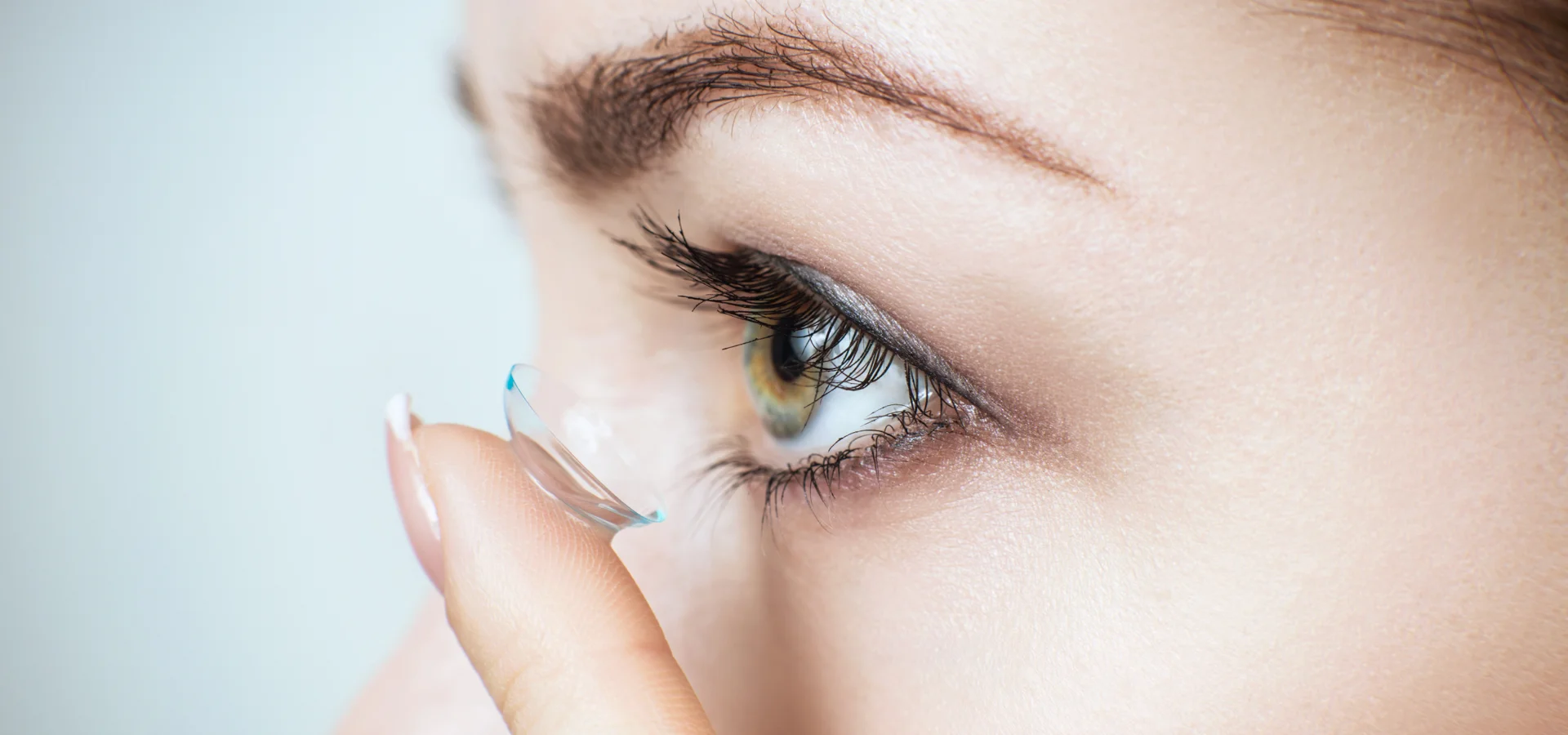
If soft lenses are still the right fit for you, these are the two daily disposable designs we reach for most often specifically for dryness.
A water gradient lens: the core holds the correcting power, but the surface itself is built to almost pure water, so what touches your eye is closer to tear film than plastic.
Built with a moisture-retaining surface that resists dehydration through the day, plus a coating designed to reduce end-of-day irritation for longer screen sessions.
Worn only overnight, so your eyes are completely lens-free through the day, no evaporation, no deposits, no screen-related dryness while you're awake. Learn about OrthoK.
Vaults completely over the cornea, holding a reservoir of preservative-free saline against the eye all day. Often genuinely transformative for more significant chronic dry eye. Learn about scleral lenses.
Sometimes the lens isn't the problem at all. If your tear film or eyelid glands need treating in their own right, we'll assess that alongside your lens fitting. About dry eye.
Book a dry eye lens assessment and we'll work out exactly what's causing the discomfort, then match you to a lens that actually solves it.